
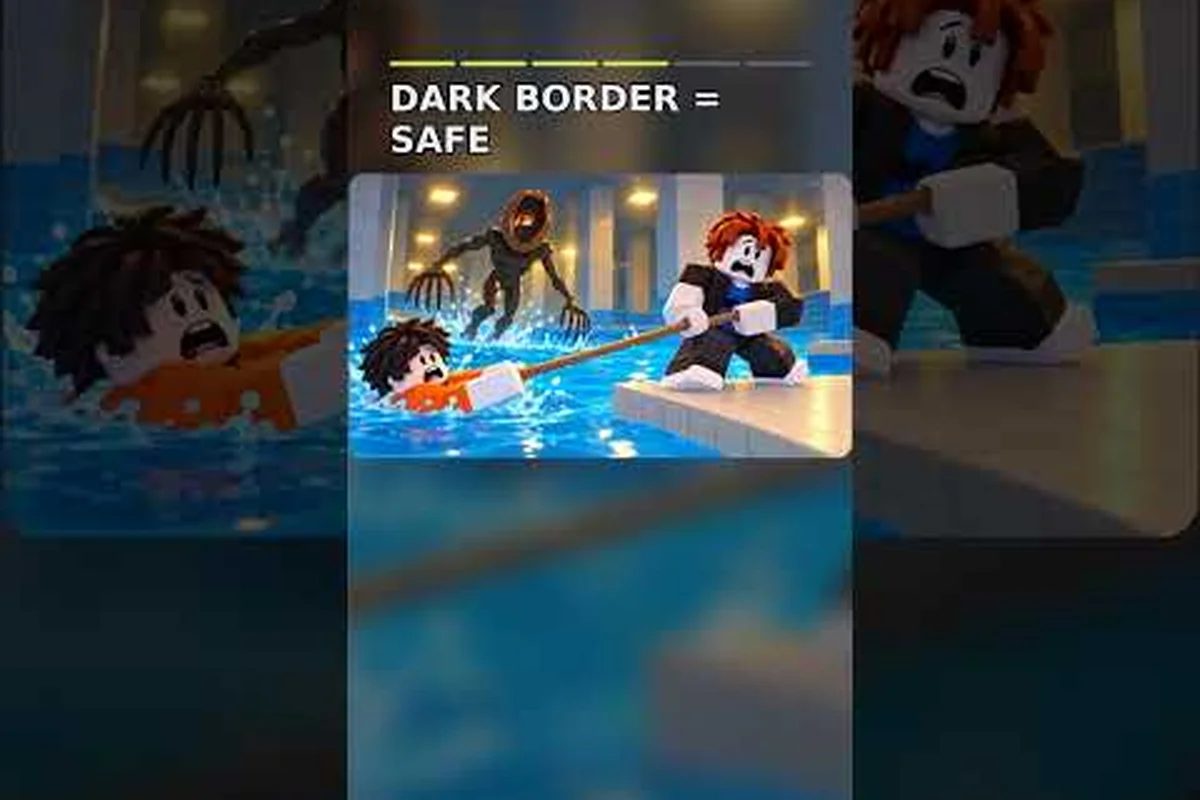
Learning to distract the creature in DONT SPLASH turns a blind, sound-driven chase into a controlled route: a deliberate splash or pebble throw far from your position pulls IT toward the noise, which creates a safe window to reach the next objective without being heard.
Dont Splash Distract the Creature: Core Mechanics
Learning to distract the creature in DONT SPLASH turns a blind chase into a controllable route problem. IT navigates by sound rather than sight, so a deliberate splash far from your position can pull its patrol away from the next objective; learn the creature’s core behavior to use that rule safely.
The essential technique is simple: create a Controlled Splash, wait for IT to commit, and cross while it moves toward the noise. Pebbles are the cleanest option because their limited reach lets you choose a distant target without producing a trail of disturbances near yourself.
| Decoy method | Sound control | Best use | Main risk |
|---|---|---|---|
| Pebble throw | High precision | Pull IT away from a route or exit | Throwing into nearby water may alert the wrong zone |
| Flare or thrown distraction | Moderate precision | Emergency diversion | Can create more than one noise source |
| Player-made splash | Lowest control | Last-second escape route | Reveals your actual position |
| Passive environmental splash | Unpredictable | Break a predictable patrol | May happen too close to your avatar |
Use headphones and watch the water’s surface before acting. Community walkthroughs report that dry platform landings remain quiet, while entering water, clipping its surface during a jump, or striking water with a thrown object immediately attracts IT. The official DONT SPLASH game page on Roblox confirms the central rule: the creature responds to splash detection rather than visual contact.
Dont Splash Patrol Routes and Chase Triggers
The dont splash monster patrol follows a Sound-to-Charge Loop: IT detects a splash, moves toward that location, and continues investigating the disturbance instead of tracking your body directly. That delay creates the opening for a lure, but only if you throw before the creature is already close enough to intercept you.
Reading the Patrol
A patrol is safest to manipulate when IT is moving on a predictable line and your next crossing is behind its shoulders. A distant pebble can reverse that line without forcing you to move. If IT is already investigating your position, throwing another nearby object may merely accelerate the collision.
Watch for these practical signals: a successful distraction should pull the monster’s attention away from your current route before it begins a close inspection. For example, if a patrol is following a narrow shoreline, throw a pebble toward the far end of that shoreline and wait for its head and body to turn before crossing behind it. This timing matters because a splash made while the monster is still facing your position can reinforce its search rather than redirect it.
-
Surface movement: Ripples indicate a recent water contact, but they do not reveal whether IT is still approaching or has begun patrolling again.
-
Directional audio: Community reports describe a chase buildup before the creature commits. Headphones can make that transition easier to recognize.
-
Charge commitment: Once IT turns decisively toward a splash, move immediately rather than adding another noise.
-
Dry footing: Landings on dry platforms do not create the same alert as touching water.
For more detail on why line of sight does not protect you, see DONT SPLASH’s water-sensitive monster behavior. The practical lesson is that looking directly at IT does not make you invisible; only avoiding detectable splashes changes its search behavior.
Decoy Placement Rules
Place the first throw at least two route segments ahead of IT. One segment may be too close, especially if your avatar can reach the splash before IT does. A strong lure is farther away, clearly audible, and positioned in the direction you want IT to leave.
| Placement | Likely result | Suitability |
|---|---|---|
| Same platform as the player | Very high interception risk | Avoid |
| One short segment away | Unpredictable; IT may reach it first | Use only as an emergency |
| Two or more segments away | Better separation from the player | Preferred for routine lures |
| Across a required route | Pulls IT into the intended path | Useful when carefully timed |
| Far behind the creature | Slower reaction, but safer separation | Best when time is available |
Remember that a lure changes IT’s direction, not the rules. IT may pass through your route, and a thrown pebble landing in water can still affect the timing of the entire level. For example, if the creature is already moving along the required route, a lure placed two or more segments away may make IT pause or turn without making the splash itself a safe crossing point. Watch its movement first: the splash can confirm a distraction, but it does not cancel the creature’s route, and crossing immediately after the throw can still put you in its path. Confirm that IT is moving away before committing to the next platform.
Dont Splash Pebble Lure Step-by-Step
A reliable dont splash distract the creature sequence uses timing, distance, and one clean noise. The goal is not to keep the creature occupied forever; it is to buy a short interval in which your avatar can cross a dangerous water route.
The Six-Step Lure
-
Stop on dry ground. Confirm that your avatar is not touching water or making ripples.
-
Identify the patrol direction. Watch IT travel and listen for the moment it begins patrolling again.
-
Choose a landing zone. Pick water at least two safe segments away from your position.
-
Aim for the water's center. An edge landing may sound less consistent or place the decoy too close to a wall.
-
Throw once and pause. Do not spam additional objects. A single clean sound is easier for you to interpret and less likely to create competing distractions.
-
Move during the charge. Cross toward your objective as IT travels toward the pebble landing, then stop on dry ground before it reaches the source.
Player footage of the pebble mechanic demonstrates the same basic pattern: the thrown object lands in distant water, IT moves toward that sound, and the player advances along the opposite side of the route. Timing the movement to the first directional reaction is safer than waiting until IT is halfway across the map.
Useful Timing Windows
| Timing choice | Result | Risk level |
|---|---|---|
| Throw before IT begins patrolling | Maximum route control | Low if the landing is distant |
| Throw during patrol | Usually effective | Moderate |
| Throw when IT is already chasing | Limited diversion | High |
| Throw after IT reaches the pebble | Little benefit | High |
| Throw twice in quick succession | May split attention unpredictably | Moderate to high |
One-Sound Rule: A single intentional splash gives IT a readable cause and effect: throw once toward a clear off-route landing, then let IT commit to that distraction. The table’s patrol timing still applies, because a sound made while IT is already chasing has limited diversion value. Several simultaneous splashes can blur IT’s destination and create the exact interception you were trying to prevent.
Dont Splash Distraction Tools Compared
Pebbles and flares occupy different roles in a distraction plan. Pebbles offer deliberate placement, while louder objects can rescue a run when the creature has already noticed water nearby. A third option—making your own splash—is immediate but trades secrecy for distance.
| Tool | Control over distance | Noise predictability | Best timing | Best risk to avoid |
|---|---|---|---|---|
| Pebble | High | High | Routine patrols | Landing close to the avatar |
| Flare | Medium | Medium | Urgent diversion | Secondary noise or nearby landing |
| Object throw | Medium to low | Medium | Planned side route | Missing the intended water |
| Direct splash | None | High | Immediate escape | Telling IT exactly where you are |
| Waiting for a patrol change | High | High | When no throw is available | Losing an objective window |
Pebble: Precision First
A pebble is the best default because the player controls its landing point. It is especially useful when the next safe path is on the opposite side of the creature. Throw into open water rather than near a wall, because tight spaces may reduce the useful gap between the lure and your position.
Distant Landing: Aim for a water patch you could reach only after IT commits to the pebble. That separation makes a missed timing window less likely to become a direct collision. Try placing the landing point across a clear stretch of water rather than directly beside the creature, then watch for its turn toward the splash. Once IT commits, the pebble has drawn its attention away from your route, so move immediately toward the reachable water instead of circling the distraction point. If the creature remains between you and open water, use the pebble again to reset its movement rather than forcing a path through it.
Flare: Controlled Emergency
A flare or another noisy object is better understood as an emergency tool than a precision lure. It can pull IT toward a wider area, but its exact landing may be less consistent. Use it only when a nearby alternative would expose your real position, and make sure the noise does not attract IT toward another player-controlled path.
Direct Splash: Last Resort
Running into water is the least private distraction because it identifies your current location. It remains useful when escape speed matters more than secrecy, such as when a locked path has just opened and remaining in place is more dangerous than briefly revealing yourself.
The guide to every action that counts as a splash breaks down falling, midair contact, and object impacts. Use that list to audit risky animations before you attempt a new route.
Dont Splash Monster Spawn, Speed, and Positioning
The dont splash monster spawn is not a battle you can win through damage. IT is a pursuing hazard, and the relevant question is where it will investigate after each noise. Understanding its speed and position helps you avoid the dangerous point where a decoy stops working and a direct chase begins.
Can the Creature Be Killed?
The answer to whether you can kill the monster is effectively no. The verified gameplay clips show that the creature ends a failed run through contact and a jumpscare rather than a conventional health bar. Your defensive tools are Avoidance, Sound Decoy, and Distance.
| Threat condition | What IT does | Player response |
|---|---|---|
| Quiet movement on dry ground | Patrols without targeting the avatar | Continue toward the objective |
| Object hits distant water | Charges toward the sound | Move during the charge |
| Player enters water | Detects the player's splash | Escape or accept a direct approach |
| IT reaches the player | Ends the attempt with a jumpscare | None after contact |
| Creature reaches an old lure | May resume patrol or change course | Reassess before crossing |
Interpreting Monster Speed
There is no confirmed numeric speed value in the verified data, so assigning a fixed distance per second would be misleading. Instead, compare movement during the Patrol Phase, Charge Phase, and Investigation Phase. IT appears to move with greater urgency after a fresh splash, while its behavior near an old noise becomes less predictable.
Community footage suggests that sound arrives before contact, which gives a reaction window if you remain attentive. Do not assume that window is constant: moving during the charge is much safer than starting late and sprinting through the creature's path. More detail on the pursuit stages appears in DONT SPLASH’s monster chase guide.
Where You Should Never Stand
Avoid dry ground close to the landing point of your own throw. Even if IT heads toward the pebble, it may pass your position before changing direction. A good distraction produces a broad separation between you and the decoy, not merely a louder noise nearby.
Dont Splash Advanced Distraction Routes
Basic lures move IT once, while advanced players use the creature’s Noise History to turn one distraction into two separate opportunities. If a lure pulls IT toward a corridor, immediately place a second noise on the opposite side before its patrol turn resolves; this gives the monster spawn two competing sound cues, letting you redirect the monster patrol without exposing yourself. Because room exits and patrol lines determine whether this bait-and-switch works, test each route against the level geometry rather than relying on a fixed sequence.
The Cross-Peak Setup
This setup places the decoy across a narrow route that IT will later cross. Throw while IT patrols on your side, then wait for the charge. Once IT moves through the crossing point, your path opens on the opposite side.
-
Confirm the crossing point is wide enough for your route.
-
Keep the pebble in open water rather than directly beside the choke.
-
Move only after IT turns toward the decoy.
-
Stop on dry ground before entering the creature's approach lane.
The Reverse-Lure Pivot
A reverse-lure pivot uses a nearby throw to move IT away from your intended direction, followed by a second throw farther away. The first object must be distant enough to avoid an immediate interception; the second is your actual route reset.
This pattern is riskier because two noises can make IT's final position uncertain. Use it only when the route offers a safe waiting platform, and save it for situations where a single decoy would not clear the required crossing.
| Advanced pattern | Main benefit | Failure condition | Recovery |
|---|---|---|---|
| Cross-peak | Opens a choke point | Pebble lands too near the crossing | Abort and use a dry detour |
| Reverse-lure pivot | Clears a stubborn route | Second noise masks the first | Retreat to dry ground |
| Noise-chain | Creates a longer patrol reset | Multiple targets spread IT too far | Wait for patrol reset |
| Objective-first lure | Pulls IT away from a required pickup | Objective sits near the decoy | Choose a different water target |
Preserve Dry Landing Zones
Every successful distraction still requires an exit. Identify at least one dry landing area before throwing, because the worst mistake is using a pebble to open a route that ends at another splash. Keep the avatar from clipping the water during a jump, and do not assume a successful throw eliminates all water contact hazards.
A DONT SPLASH horror lore and environment overview can help you interpret the pool-centered design that makes every loud landing especially dangerous, but lore clues should remain separate from confirmed mechanics. For example, a creature patrol approaching the pool may indicate that splashing briefly interrupts its route, while the monster’s speed and whether it can be killed remain uncertain; test distractions against visible monster behavior rather than assuming that every apparent reaction is proof.
Frequently Asked Questions
Can you kill the monster in DONT SPLASH?
No. The creature cannot be defeated through attacks or health damage, and verified gameplay shows contact ending the run with a jumpscare. Your effective defenses are staying on dry ground, using distant sounds to redirect IT, and moving during its charge. Pebble lures buy time rather than destroying the threat.
Is the monster real in DONT SPLASH?
The creature behaves like a real pursuing entity inside the game's rules, but it is not visible to you in the usual sense. The official game page describes IT as blind, while community gameplay confirms that IT tracks splashes. In story terms, its credibility depends on interpretation; mechanically, it is always active and dangerous.
How fast is the monster in DONT SPLASH?
The verified material does not provide a reliable numerical speed, so a fixed meters-per-second value would be guesswork. IT appears to move urgently after a splash and may redirect near an old noise source. Use audio cues to judge the charge instead of relying on a nonexistent speed statistic.
What is the best way to distract the creature in DONT SPLASH?
A distant pebble is usually the most controllable option because you choose its landing point. Throw it into open water at least two safe route segments away, then cross while IT moves toward the sound. Avoid throwing beside yourself, spamming several objects, or remaining in the creature's approach lane.
Does a pebble make noise when it lands on dry ground?
A pebble only provides a useful lure if it creates the sound that attracts IT. Its impact should land in water, where it produces a splash; a dry landing gives you little control over the creature's attention. Always verify the landing area before moving because a miss can either create no useful diversion or produce an unintended noise.