
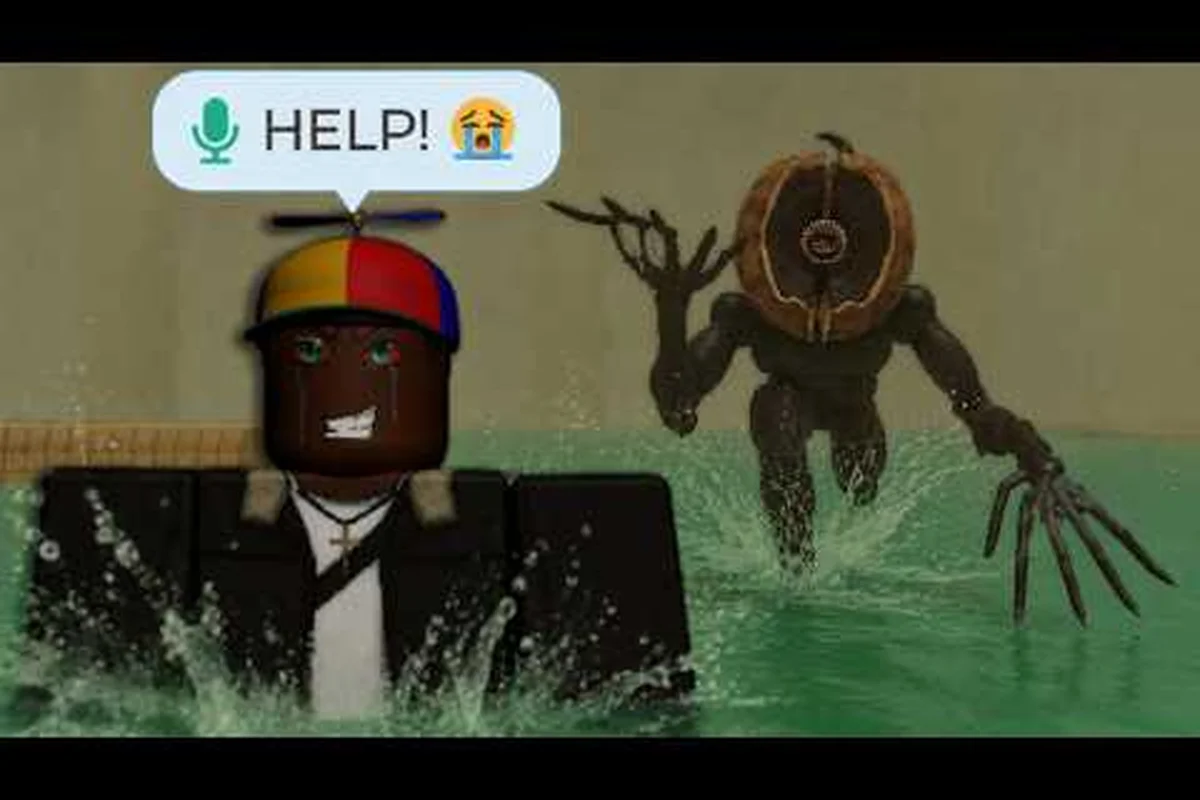
DONT SPLASH solo vs multiplayer play changes the risk around every splash, and that difference matters because one careless fall can redirect the creature toward someone else. Compare server sizes, player behavior, and coordinated tactics to choose the format that fits your run.
DONT SPLASH Server Formats and Core Differences
DONT SPLASH solo vs multiplayer is less about which mode is universally better and more about how much control each option gives you over attention, noise, and cooperation. A solo run offers cleaner decisions and fewer accidental distractions, while a 10-player server adds social energy and shared objectives but also introduces crowd risk.
The official DONT SPLASH game page on Roblox confirms that servers can hold up to 10 players in the flooded maze. Because every server shares the same environment, a stranger’s mistake can alter your route, pull the creature toward your group, or consume resources before you can react.
| Play format | Typical attention level | Main advantage | Main drawback | Best for |
|---|---|---|---|---|
| Solo server | Focused | You control every movement and splash | No teammate distractions or backup | Learning routes and testing strategy |
| Small group | Moderate | Some decoys and teammate support | Coordination still imperfect | Cooperative experimentation |
| Full 10-player server | Crowded | Fast, energetic encounters | More accidental noise and target switching | Social play and chaotic runs |
What the 10-Player Cap Changes
With 10-player capacity, a full server can fill quickly, especially after DONT SPLASH entered Roblox’s trending and up-and-coming charts. More players create more opportunities to misdirect the creature, but they also make it harder to identify who caused a particular splash. That uncertainty is the main cost of choosing a crowded server.
Solo play reverses that equation. Your attention is entirely under your control, so a failed jump becomes your own mistake rather than a teammate’s interruption. The tradeoff is that a decoy strategy cannot work unless you set it up yourself, meaning every diversion requires either a planned distraction or a deliberately risky movement.
Attention Is the Real Resource
The central difference between solo and multiplayer is not raw difficulty. It is attention allocation. In a solo server, you can watch one route, monitor the creature, and think several moves ahead. In a busy server, you must also account for other people’s movement, especially when they bunch together around a bridge, doorway, or narrow platform.
A crowded server can therefore feel easier at first because more people create visual distractions. Later, however, the same density makes the creature’s path less predictable. Player reports describe a consistent pattern: avoiding tight groups and spreading across the maze reduces the chance that a single accident redirects everyone’s route.
DONT SPLASH Player Count and Crowd Noise
The most useful answer to the dont splash player count question is not simply “more is better.” Capacity affects the number of possible distractions, but coordination quality determines whether those extra players become allies or hazards. A server of three attentive friends can be safer than a full lobby of strangers because each person can follow a clear plan.
| Player count | Noise probability | Coordination | Creature-management potential | Risk pattern |
|---|---|---|---|---|
| 1 | Low | Complete | Limited to self-directed decoys | Mistakes remain predictable |
| 2–3 | Low to moderate | Easy with practiced teammates | Strong paired diversions | One mishap can affect both players |
| 4–6 | Moderate | Fair | Several simultaneous decoys | Group movement needs spacing |
| 7–10 | High | Variable | Maximum potential | Target switching becomes common |
When More Players Help
A larger group can divide responsibilities without creating constant communication. One player might throw a pebble in one direction while another crosses a dangerous gap, and a third watches for the creature’s response. Community walkthroughs describe this as a coordinated decoy system, where the group assigns a designated distractor while the remaining members move.
This works best when players spread out. A team occupying several branches of the maze gives the creature multiple possible interests, reducing the chance that it follows the player crossing the critical route. The same group becomes less effective when everyone remains packed together, because a single splash still redirects the entire cluster.
When More Players Hurt
The danger of a full 10-player server is accidental noise. A falling stranger can pull the creature toward a teammate who is following a careful route, while a panicked crowd can cause a chain reaction of splashes. A player who needed to remain still may suddenly move because someone else approached, creating a failure that no one intended.
Crowd noise is therefore more than background chatter. It includes sudden movement, startled reactions, objects landing in the wrong area, and players changing direction without warning. A coordinated group can control those signals; a public server cannot. This makes the dont splash best server size question highly dependent on whether communication is available.
Practical Spacing Rules
The safest multiplayer approach is to avoid moving as one mass. Keep visible teammates several body lengths apart, and do not gather directly beside a player who is preparing a jump. When one member commits to a dangerous crossing, everyone else should remain still unless that player calls for a decoy.
| Situation | Recommended action | Why it works |
|---|---|---|
| Teammate preparing a jump | Stand still and watch | Prevents accidental crowd noise |
| Creature moving toward a teammate | Throw a pebble away from the route | Tests or commits the diversion |
| Full server near a gap | Spread across separate lanes | Reduces chain reactions |
| Group enters an unfamiliar area | Let the front player scout | Limits simultaneous mistakes |
| One player remains behind | Assign a deliberate decoy role | Prevents accidental target switching |
DONT SPLASH Best Server Size by Play Goal
There is no universal winner in the dont splash best server size comparison. The practical answer depends on whether you want to learn the maze, finish efficiently, record a clean run, or enjoy the social chaos. A useful framework is to match the server size to the amount of coordination available.
| Player goal | Recommended server size | Expected challenge | Primary benefit |
|---|---|---|---|
| Learn the map | 1–3 | Moderate | Time to observe safe patterns |
| Practice a route | 1–2 | Low to moderate | Fewer outside interruptions |
| Test decoy tactics | 3–5 | Moderate | Several controllable diversions |
| Play socially | 5–10 | High | Shared excitement and movement |
| Record a clean clip | 1–2 | Low | Greater control of timing |
| Chase a fast completion | 4–6 | Moderate to high | Enough support without excessive crowding |
Best Size for Learning
A solo server is the cleanest place to learn where the hazards sit and how the creature reacts. There is no chance that a stranger will disturb a carefully timed movement, so you can repeat the same section and test whether a route is dependable. For more efficient route planning, the DONT SPLASH retry guide provides a useful companion to repeated solo attempts.
A two- or three-player server can be even better for learning because a trusted partner can watch the area behind you. The key is communication: if both players know when to move, the server remains controlled. If one person panics or starts moving without warning, the supposed advantage becomes a distraction.
Best Size for Cooperation
Three to six players offers the strongest balance for deliberate cooperation. The group has enough members to create decoys without producing the constant movement of a completely full server. One person can draw attention, another can cross, and a third can watch for recovery opportunities.
| Group role | Primary task | Timing | Common mistake |
|---|---|---|---|
| Distractor | Pull the creature away | During another player’s crossing | Moving too late |
| Path opener | Clear or inspect a route | Before the group advances | Rushing past a safe mark |
| Rear guard | Watch behind the group | While others move forward | Leaving the group exposed |
| Scout | Identify a new path | At the start of a section | Wandering alone too long |
| Caller | Coordinate changes | During a fast redirect | Calling too late |
Best Size for Social Play
For pure social play, a full server is valid despite the danger. The unpredictability is part of the experience, especially for clips and memorable encounters. However, a social player should treat every crowd as a temporary alliance rather than a coordinated team. Keep the group moving, but do not assume strangers will hold a formation or follow a plan.
Players who want the most reliable group setup can compare public and private options in the DONT SPLASH guide to playing with friends. The key difference is not whether the server is technically full; it is whether everyone understands the same signals before danger appears.
DONT SPLASH Solo and Multiplayer Strategy
Solo and multiplayer runs fail for different reasons. Solo players tend to overcommit, wait too long for a perfect opening, or forget to create a distraction before crossing. Multiplayer groups more often fail through poor spacing, premature movement, and a lack of clear roles. Understanding these failure patterns makes the dont splash solo vs multiplayer decision much easier.
Solo Route Discipline
A solo player should divide each section into three phases: scout, commit, and recover. Scouting means watching the route and the creature without moving. Committing means taking the shortest reliable path rather than testing a risky shortcut mid-run. Recovery means having a pebble-based distraction ready if the creature changes direction.
Scout–commit–recover gives a solo run a repeatable rhythm. It also prevents the common mistake of reacting to every noise. If a sound comes from a direction you cannot see, moving immediately may create exactly the splash you were trying to avoid.
Multiplayer Signal Discipline
A cooperative group needs a tiny signal system rather than a long list of rules. Players should distinguish “move now,” “stay still,” and “make a decoy.” Even simple verbal calls can prevent several failures, but the calls should happen before movement rather than after it.
| Signal | Meaning | Expected response |
|---|---|---|
| Move now | Route is open | Cross one at a time |
| Hold | Creature or hazard detected | Everyone stops moving |
| Decoy | Pull attention away | Distractor acts immediately |
| Rotate | Switch positions | One member yields to another |
| Regroup | Reconnect before next section | Others hold a safe position |
Signal discipline matters more than raw player count. A coordinated five-person squad can outperform ten independent players because only the decoy, the flanker, and the regroup anchor need to act on a call at the same time; the remaining players can hold position without adding accidental noise. For example, a “Hold” call freezes the entire squad before a hazard triggers, while “Decoy” sends one player to pull attention instead of making everyone rush and reveal the plan.
When to Stop Playing Multiplayer
Leave a crowded server if teammates repeatedly move into your path, if the group forms a tight cluster, or if players ignore clear warnings about a creature. Continuing after a communication breakdown may still produce entertaining clips, but it no longer improves the run.
Likewise, do not abandon solo play merely because another player performed better once. Solo runs provide direct information about your own timing and route knowledge. Use the DONT SPLASH play with friends guide when you want coordinated support, and return to solo play when you need precise execution without external noise.
DONT SPLASH Players Online and Trending Context
Server size cannot be understood without the game’s rapid growth. Community data reported that DONT SPLASH was created on October 17, 2026, first appeared in Roblox’s Top Trending and Up-and-Comcoming charts on October 21, and grew from roughly 10,000 to more than 50,000 concurrent players by October 24.
That growth explains why players are asking about dont splash players online and dont splash concurrent players. A large total audience does not mean every individual server is full, but it does make crowded lobbies more likely at peak times. It also means the public experience can change quickly as more players learn the creature’s attraction mechanic.
| Reported metric | Date or period | Figure | What it indicates |
|---|---|---|---|
| Game creation | October 17, 2026 | — | The initial release point |
| First Trending and Up-and-Comcoming appearance | October 21, 2026 | — | Rapid discovery after launch |
| Early concurrent audience | Around October 21–24, 2026 | About 10,000 | Strong interest shortly after release |
| Reported concurrent peak | By October 24, 2026 | More than 50,000 | Major visibility and server demand |
Why the Trending Audience Changes Matchmaking
When a game is a dont splash trending roblox game, fresh players enter at the same time as experienced players. Public servers therefore contain a mix of cautious beginners, aggressive sprinters, and groups testing the decoy system. That variety makes the route less uniform and increases the value of spacing.
The wider conversation around its Halloween timing and clip-friendly failures is covered in the DONT SPLASH trending analysis. For server selection, the practical point is simpler: a large audience raises the odds that a public server will feel lively, crowded, or unpredictable.
Peak Times and Server Availability
Community reports and player observations are best treated as time-sensitive guidance rather than permanent rules. The number of people online can shift throughout the day, and a server that is comfortably populated during one hour may be much busier after a creator clip or platform feature highlights the game.
| Matchmaking condition | Likely result | Best response |
|---|---|---|
| Low activity | Mostly empty servers | Practice solo routes freely |
| Moderate activity | Mixed skill levels | Use deliberate spacing and signals |
| High activity | Full or near-full servers | Expect crowd noise and target switching |
| After a viral clip | Sudden player surge | Wait briefly or choose a smaller group |
Choosing a Server During a Surge
When DONT SPLASH reaches a dont splash roblox top trending position, a public server may fill before you finish reading the rules. Joining immediately is acceptable for social play, but careful players often wait for the initial group to disperse or coordinate with friends before entering a shared lobby.
The useful distinction is between audience size and server occupancy. A DONT SPLASH concurrent player count above 50,000 indicates broad interest, but the public server you enter may still cap at only 10 players. For example, 40,000 viewers across thousands of DONT SPLASH servers does not mean any single lobby contains 40,000 competitors. Judge the player count in your chosen server, because that determines teammate coordination, target access, and competition for resources—not the platform’s total players online figure.
Practical Recommendations by Player Style
The final dont splash solo vs multiplayer choice should follow your tolerance for unpredictability, communication availability, and recording goals. Solo play rewards patience, while multiplayer play rewards communication and quick adaptation. Neither style removes the creature’s attraction mechanic; they simply change who controls the variables around it.
Recommended Solo Setup
Choose a solo server when you are learning a route, testing a consistent line, or making a clean recording. Avoid experimenting with unnecessary shortcuts during a serious attempt, because a single failed movement can end the run and force you to restart from the beginning.
Solo priority: map knowledge and clean timing. In a solo server, every landing, checkpoint, and route decision is easier to diagnose because no teammate’s movement can interrupt the sequence. For example, if a high jump or wall-run consistently breaks your line, you can repeat that exact section without coordinating around other players, then focus on frame-perfect timing before testing the route again. This makes solo practice useful for learning the map and measuring progress, while multiplayer remains better for social play and comparing runs against other players.
-
Watch a route before crossing it.
-
Keep one distraction option ready.
-
Avoid stopping in exposed areas after a loud landing.
-
Repeat difficult sections until movement becomes consistent.
-
Record after learning the route, not while discovering it.
Recommended Multiplayer Setup
Choose multiplayer when you enjoy fast decisions, shared discoveries, and cooperative decoys. A three-to-six-player lobby works best for serious runs because each teammate can cover a separate lane, react to sudden creature turns, and distract the monster while another player crosses a hazard. Larger lobbies can create social chaos, but they also make communication harder, so use them for casual play rather than coordinated survival. Solo remains better when you prefer to control every route, timing, and decoy yourself.
Multiplayer priority: spacing and role clarity give the team more usable information than raw player count. In a three-to-six-player lobby, reserve one player as the creature watcher, another as the hazard caller, and use the remaining players for timed crossings; this reduces missed direction changes and prevents everyone from reacting to the same decoy. For example, when a player calls a creature turn, the rest of the group should hold position while the designated watcher confirms the safe lane. If signals are ignored, a smaller group is more effective than adding more players.
-
Assign the distractor before crossing.
-
Move one player at a time near hazards.
-
Keep the group spread across separate lanes.
-
Stop immediately when the creature changes direction.
-
Use a smaller group if strangers ignore signals.
Which Option Produces Better Results?
| Goal | Solo | Multiplayer | Winner |
|---|---|---|---|
| Consistency | Full control | Dependent on teammates | Solo |
| Learning the maze | Repeatable testing | Mixed experience | Solo |
| Strategic decoys | Limited to one player | Several simultaneous diversions | Multiplayer |
| Social enjoyment | Low | High | Multiplayer |
| Clean content creation | Fewer interruptions | More chaotic clips | Depends on style |
| Fast adaptation | Only your reactions | Shared observations | Small group |
| Lowest accidental noise | Minimal | Moderate in coordinated groups | Solo |
The best general recommendation is to use solo play for instruction and small multiplayer groups for execution. That division preserves the benefits of both systems: you learn where the dangers are without noise, then test whether trusted teammates can reproduce the route while handling decoys.
Frequently Asked Questions
Is DONT SPLASH better in solo or multiplayer?
DONT SPLASH is usually better in solo mode for learning routes and recording clean runs because you control every movement. Multiplayer is better for cooperative decoys and social play, although a crowded lobby increases accidental splashes. A group of three to six coordinated players offers the strongest balance between support and manageable noise.
What is the best server size for DONT SPLASH?
The best server size depends on your goal: use one or two players for precise route learning, three to six for controlled cooperation, and seven to ten for social chaos. Trust and communication matter more than raw occupancy, because coordinated groups can maintain spacing while crowded public servers frequently create chain reactions.
How many players are in a DONT SPLASH server?
A DONT SPLASH server can hold up to 10 players, according to the official Roblox game page. The total number of concurrent players across the game was reported at more than 50,000 by October 24, 2026, although that platform-wide figure does not mean every individual server is full.
Does playing with strangers make the creature more dangerous?
It can, because a stranger may splash while crossing, and the creature may redirect toward your route. You can reduce the risk by spreading out, keeping still near dangerous gaps, and avoiding tight groups. Trusted teammates who use clear calls are generally easier to coordinate than a large public lobby.
Should I use pebbles in multiplayer DONT SPLASH?
Yes, pebbles are especially useful when a teammate is crossing. A coordinated player can throw a pebble away from the crossing path to draw the creature elsewhere. The decoy must begin before the teammate moves because a late distraction may pull attention toward the group instead of away from it.