
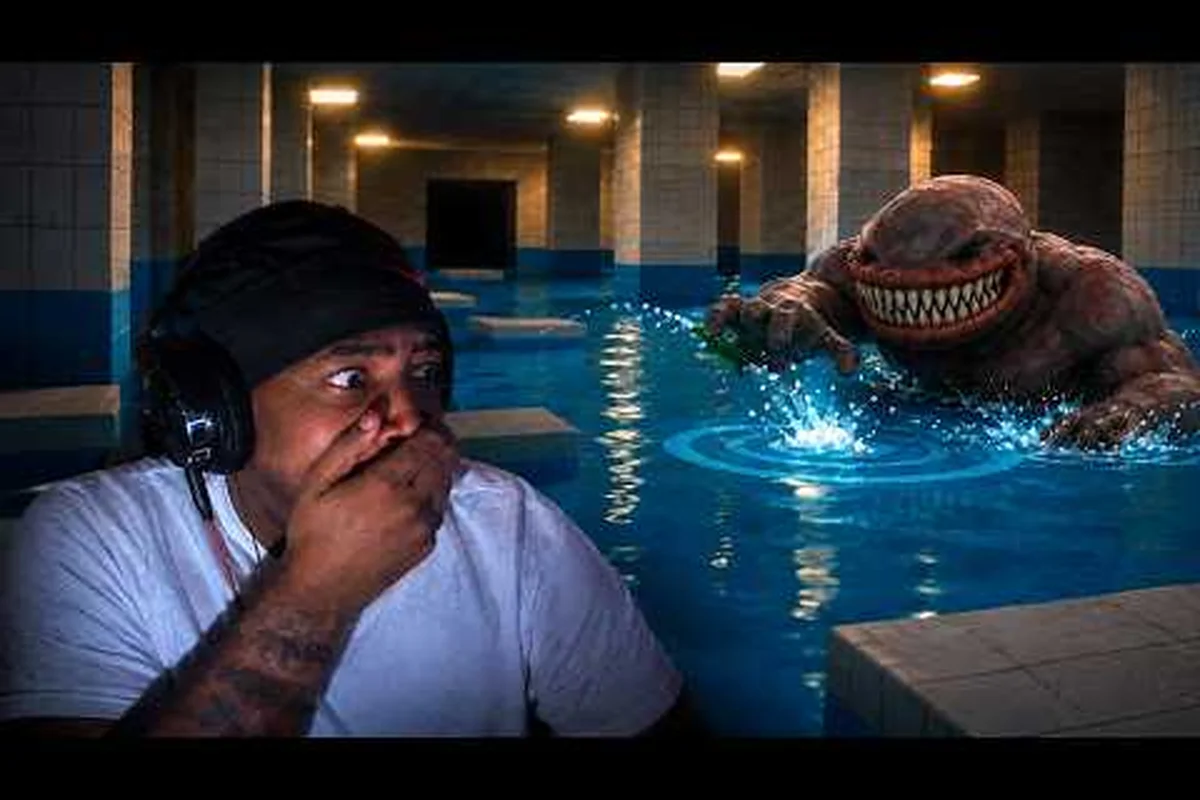
DONT SPLASH is trending because its simple rule, tense multiplayer encounters, and clip-friendly failures hit Roblox at the right moment. The October launch, Halloween atmosphere, and rise from roughly 10,000 to more than 50,000 concurrent players created a strong visibility loop, especially for dont splash roblox horror fans.
Why DONT SPLASH Entered the Roblox Trending Spotlight
DONT SPLASH launched on October 17, 2026, and appeared in Roblox's Top Trending and Up-and-Coming charts by October 21, according to the official DONT SPLASH game page. The early climb matters because Roblox discovery is based on visible activity: players are more likely to enter a game when it is already busy, active, and generating fresh social proof.
Three elements reinforced one another. First, the premise was understandable without a tutorial. Second, the 10-player server format made every mistake social. Third, the monster reacted to sound, so even small actions could cause dramatic consequences. That combination explains the question behind the current conversation: why is DONT SPLASH trending rather than merely launching successfully?
| Growth signal | Reported timing | What it suggests |
|---|---|---|
| Roblox release | October 17, 2026 | The game entered the market during a high-interest horror period |
| Top Trending and Up-and-Coming appearances | October 21 | Roblox surfaced the title to players browsing new releases |
| Early concurrent audience | About 10,000 | The game had enough activity to generate a crowded-server atmosphere |
| Reported concurrent audience | More than 50,000 by October 24 | Word-of-mouth interest appears to have accelerated discovery |
The numbers come from the official game-page data and community reporting captured on October 24, so they should be treated as a snapshot rather than a permanent player count. Even so, the scale of that change indicates more than normal launch visibility. A game that quickly grows through that range can create a feedback loop: more viewers generate more clips, clips bring in new players, and larger player groups make more unpredictable encounters.
This rapid growth also helped turn dont splash multiplayer from a gameplay feature into a discovery mechanism. A recorded failure in a busy server is more entertaining than a rehearsed demonstration because the viewer cannot tell whether the player caused the disaster or was betrayed by a teammate. The possibility of betrayal keeps people watching even after they understand the basic objective.
The Name Is Memorable and Searchable
The title is doing valuable promotional work. DONT SPLASH is short, distinctive, and easy to repeat, while the title on the official Roblox page makes the central hazard immediately visible. A person can understand the game's basic risk before watching a full run.
That simplicity helps short-form video. A creator does not need a long explanation before showing a player edging across a flooded obstacle, hearing a noise, and then seeing the creature change direction. The rule works almost like a visual punchline: movement, sound, panic, pursuit. Repetition of that pattern in different situations makes the game recognizable across videos.
Search interest follows the same pattern. When viewers ask why DONT SPLASH is trending, the game's name is already embedded in the result, and related clips reinforce the association. The result is a compact loop of curiosity, recognition, and sharing that helps explain why DONT SPLASH is popular beyond its launch date.
The Sound-Hunting Monster Creates Shareable Failures
The most important reason DONT SPLASH is trending is the tension between a simple movement challenge and a monster that hunts through sound. Unlike an obstacle course where failure comes mainly from mistimed jumps, this game adds uncertainty. A player may cross safely and still become the target because another character made noise nearby.
Community walkthroughs describe a common multiplayer pattern: one person falls into water and draws the creature toward the group. A coordinated team can therefore assign a decoy to throw a pebble while others cross a dangerous gap. The tactic works because it converts a shared threat into a temporary role, creating a brief plan that can unfold believably on screen.
| Game event | Immediate result | Viral content potential |
|---|---|---|
| Pebble thrown away from teammates | Monster may investigate the decoy | A clean escape after a suspicious distraction |
| Stranger splashes in water | Creature may turn toward that sound | Sudden betrayal with no direct warning |
| Player crosses a narrow gap | Movement creates exposure | Close call with little room for error |
| Monster reaches the group | Players scatter or sacrifice a decoy | Fast reversal that rewards replaying the clip |
| Quiet group escape | Tension ends without a chase | Relief reaction and a chance to brag about the run |
This dynamic is stronger in DONT SPLASH multiplayer than in an empty server. A teammate can deliberately make noise, but a stranger can also create a splash by accident. The uncertainty gives every short clip a question: was the failure caused by poor timing, a misunderstood teammate, or the monster hearing something nobody noticed?
Quiet Play Is Difficult but Memorable
The game rewards restraint, which makes successful runs just as interesting as failures. Players who understand the monster's sound-based behavior tend to pause, watch their group, and decide when movement is worth the risk. The tension is visible even without a chase: a character standing still while others move can signal that something dangerous is nearby.
That visual language is effective for horror audiences. Dont splash roblox horror fans already recognize games built around anticipation, limited information, and a threatening presence. DONT SPLASH compresses those ideas into short sessions, with a flooded maze providing a clear environment and water making every careless step consequential.
Players also report that spacing out is safer in public servers because it reduces the number of people capable of making noise near the same route. The DONT SPLASH multiplayer server analysis expands on the difference between crowded and controlled groups, but the key trend is the crowd itself. A busy server produces more near misses, more accidental betrayals, and therefore more reasons to share a clip.
The Clips Are Easy to Understand Without Context
Short-form viewers can enter the action before learning the full control scheme. A monster turning toward a splash is self-explanatory, and the stakes are visible. Even when a viewer does not know the complete objective, they can tell that the group is trying to cross the area without attracting attention.
This is particularly useful during a seasonal push. The official listing places DONT SPLASH among Up-and-Coming games, but a clip can travel independently of Roblox charts. A creator who discovers the game can publish a reaction or short walkthrough, while viewers who enjoy that format may enter the game to see whether they can do better. This is the sort of cross-platform discovery loop described in the DONT SPLASH launch and viral-clips overview.
Halloween Timing Amplified the Horror Appeal
The release date gave DONT SPLASH a natural seasonal boost. A flooded maze, a looming creature, and groups trying not to make a sound fit the Halloween mood, so the dont splash halloween roblox game angle was not an artificial marketing label. The atmosphere aligned with what many players were already searching for during October.
Seasonal relevance matters because game discovery is not only about product quality. Players browse Roblox when they want something new, and horror is especially easy to find during Halloween. A new title that looks appropriately eerie can receive an initial wave of attention, while a simple premise helps curious players enter without committing to a complicated RPG or simulator.
| Seasonal advantage | How it supports discovery | Result for the game |
|---|---|---|
| Horror demand rises in October | More players browse creepy Roblox experiences | Larger potential audience at launch |
| Flooded setting supports visual atmosphere | Water and reflections reinforce the spooky mood | Screenshots communicate the theme quickly |
| Halloween encourages sharing | Players seek seasonal content to watch and send | More chances for a run to travel beyond Roblox |
| Short sessions suit break-time play | Players can test a run without a long commitment | Lower barrier to trying the game |
The timing may have supplied the initial spark, but it cannot by itself explain sustained interest. DONT SPLASH kept receiving attention because the gameplay generated fresh outcomes. Halloween gave creators a reason to feature the game, while the 10-player format continued producing different stories after the first wave of viewers arrived.
Its psychological atmosphere is also easy to summarize. The DONT SPLASH psychological horror overview explores the liminal quality of the flooded spaces, but the community appeal is more immediate: players can sense danger before they can identify its source. The game sounds less like a conventional shooter and more like a shared listening exercise.
Halloween Gave New Players a Reason to Try It
A seasonal game also benefits from gift-like discovery. Players can tell one another that it fits Halloween without needing to recommend a long franchise or explain complicated lore. The invitation is straightforward: enter a crowded flooded maze, remain quiet, and see whether your group can cross before the creature catches you.
This lowers the social cost of sharing. A failed clip asks little of the audience beyond watching a few seconds, and the result naturally invites curiosity about the game itself. The result is stronger than passive visibility because the content itself carries the game name and the premise in every clip.
Multiplayer Turns Individual Mistakes into Social Stories
DONT SPLASH multiplayer is not simply a larger player count. It changes who controls the outcome. Even when a player executes a clean movement sequence, someone else may splash, throw an object, or make a sound that redirects the monster. That separation between skill and circumstance gives players a reason to cooperate, accuse, apologize, and replay.
The official game page reports that servers can hold up to 10 players sharing the same flooded maze. At that scale, teams can use deliberate distractions, but coordination becomes difficult as the group grows. The best players may behave cautiously while the rest of the server rushes toward an objective, creating exactly the kind of tension that makes multiplayer horror entertaining.
| Server behavior | Benefit | Main drawback |
|---|---|---|
| Stay close to trusted teammates | Easier to coordinate decoys and crossings | One mistake can endanger everyone |
| Spread across the maze | Fewer accidental sounds near one route | Less immediate help when the monster appears |
| Use a designated decoy | Creates a deliberate diversion | Requires communication and timing |
| Run independently | Can cover more ground | Higher risk of misinterpretation and isolation |
| Join a busy public server | More social action and clip potential | Less control over stranger behavior |
This social uncertainty contributes to the trend more than raw player count alone. A crowded server may be less fair, but it is usually more entertaining because every run involves a slightly different social system. Trusted friends know the objective and can practice; strangers may misunderstand, panic, or accidentally betray the group. Both situations produce stories.
Community Play Makes the Monster Feel Personal
A monster that is always visible or predictable becomes scenery. A sound-hunting creature remains uncertain, especially when players cannot identify which noise triggered it. In a group, blame becomes part of the experience. The player who fell may know the truth, but teammates are left wondering whether it was an accident or a deliberate diversion.
Community videos show both approaches. In the DONT SPLASH walkthrough by Zac Worthy, coordinated players assign a distractor while others move. The DONT SPLASH tips video by TonyCool emphasizes spreading out and watching for accidental noise in crowded servers. These examples demonstrate why the game is easy to discuss: the basic strategy is compact, but the execution changes with every group.
The multiplayer dynamic also explains the continued search term dont splash 7sloth. Players and creators may use the name in captions, thumbnails, or references while discussing the game, helping related content form a recognizable cluster. Search demand is not a measure of the game’s quality by itself, but repeated name recognition can make discovery easier for anyone who hears about a clip or sees a thumbnail.
The October Launch Produced a Rapid Visibility Loop
The official game page reports that DONT SPLASH first appeared on Roblox's Top Trending and Up-and-Coming charts on October 21, then grew from about 10,000 to more than 50,000 concurrent players by October 24. Those dates reveal a compressed launch cycle. A game created on October 17 reached prominent chart visibility within four days, which is fast enough for early viewers to influence the next wave of players.
This growth pattern matters because platform rankings are self-reinforcing. Newcomers see an active game, join a populated server, and experience a more chaotic version of the game than they would encounter alone. They may then create a clip, recruit friends, or return during peak hours. The server activity keeps the game visible, and the visibility attracts another layer of activity.
| Growth phase | Player behavior | Platform effect |
|---|---|---|
| Initial release | Early players test the new premise | Small but active servers create content |
| Chart discovery | Browsing players encounter the game | More simultaneous sessions improve visibility |
| Clip sharing | Failures and escapes circulate online | New audiences learn the premise without an ad |
| Group recruitment | Players invite friends to test coordination | Larger groups create more dramatic runs |
| Halloween overlap | Seasonal interest supports continued clicks | The horror theme remains timely and recognizable |
Community analysis described in the DONT SPLASH run review by Ricoko likewise points to the instantly understandable rule and clip-friendly failures. The timing worked because a new game supplied a fresh scenario for an established seasonal demand.
Why the Growth Was Not Just a Launch Spike
Launch spikes are common on Roblox, so a larger early audience alone does not explain a sustained trend. DONT SPLASH had several repeatable mechanics that could generate new content after the initial curiosity faded. Players could change teams, attempt safer routes, use decoys, or intentionally make noise. Each variation offered a new story while retaining a familiar objective.
The result was a productive loop between participation and exposure:
-
Players joined because the game was visible and popular.
-
More active servers created louder, less predictable multiplayer encounters.
-
Those encounters produced funny or tense clips that were easy to share.
-
New viewers recognized the premise and tested it for themselves.
This loop helps explain why DONT SPLASH is popular in community discussions even as the platform's trending position changes. The game's identity is portable: a viewer can understand it from a short clip, while a player can keep discovering small decisions that alter a run.
Community Identity and Creator Visibility
Creator coverage has helped give the game a recognizable identity outside its official page. Walkthroughs, tips, and reactions each emphasize a different reason to play. A walkthrough teaches decoy tactics, a tips video highlights crowd control, and a review explains why the game's failures circulate well. That range gives viewers several entry points without changing the central premise.
The game also benefits from a compact identity: flooded maze, quiet movement, pursuing creature, and a group trying not to betray itself. Creators can communicate that formula in a thumbnail, while the gameplay delivers the expected tension. Short videos remain legible even when viewers cannot hear every sound cue, because splashes, reactions, and sudden pursuits provide visual evidence of danger.
What Keeps DONT SPLASH Popular After the Initial Launch
Popularity in Roblox is rarely permanent, and the trend will naturally cool as attention shifts to other games. However, DONT SPLASH has several durable advantages: a fast onboarding period, recognizable visual setting, strong multiplayer interference, and a consistent source of dramatic clips. It also benefits from a Halloween release that gives the game a defined seasonal moment rather than an open-ended launch window.
The best way to judge its longevity is to separate discovery from retention. Discovery explains how players found the game; retention depends on whether repeated runs remain interesting. DONT SPLASH offers enough variation through group behavior, decoys, route selection, and deliberate risk-taking to support repeat play, especially for coordinated friends.
| Sustainability factor | Current strength | Long-term effect |
|---|---|---|
| Rules | Extremely simple to understand | Low barrier for new viewers and players |
| Replay value | Multiple routes and decoy decisions | Encourages repeated runs |
| Social variety | Trusted and stranger groups behave differently | Prevents every session from feeling identical |
| Content value | Clear moments of success and failure | Supports creator coverage |
| Seasonal relevance | Strong Halloween association | Helps launch timing and themed clips |
| Platform exposure | Confirmed Roblox chart appearances | Keeps the game visible to browsing audiences |
The current trend is therefore best understood as a combination of Launch Timing, Readable Horror, Social Pressure, and Clip-Worthy Chaos. None of those factors alone would guarantee a breakout, but together they create a loop that can move a Roblox experience from an Up-and-Coming listing to a visible cultural moment.
Frequently Asked Questions
Why is DONT SPLASH trending on Roblox?
DONT SPLASH is trending because it combines an instantly understandable rule with 10-player servers where one accidental splash can redirect the monster. Its October launch, Roblox chart exposure, Halloween timing, and highly shareable failures helped it grow from roughly 10,000 to over 50,000 concurrent players by October 24.
Is DONT SPLASH a multiplayer game?
Yes. DONT SPLASH supports shared flooded-maze servers with up to 10 players, so groups can coordinate distractions while also dealing with unpredictable strangers. This social element is central to the game's appeal because every splash can affect teammates, and a teammate's mistake may create the most memorable chase.
Why is DONT SPLASH popular among Roblox horror fans?
Dont splash roblox horror fans appreciate the combination of quiet exploration, limited information, and a monster that responds to sound. The flooded setting reinforces the unsettling atmosphere, while the simple objective lets players understand the danger quickly and focus on tension rather than complicated systems.
Is DONT SPLASH related to Halloween?
The dont splash halloween roblox game connection is mainly about timing and atmosphere. DONT SPLASH launched in October 2026 and uses a flooded maze, shadowy environments, and a pursuing creature, all of which align naturally with the seasonal appetite for Roblox horror experiences.
What role does 7Sloth play in DONT SPLASH's popularity?
The don’t splash 7sloth search phrase appears to be part of the game’s wider creator and player visibility, although the available source data does not establish any special role for a person or group using that name. The clearer drivers are multiplayer chaos, sound-based pursuit, viral clips, and the game’s association with Roblox horror fans.